
Thinking Territories: From Smart City to Smart Land
The concept of “Smart Land” is an evolution of the more well-known concept of “Smart City”, applied to broader territorial contexts beyond a single city, such as rural areas, provinces, or regions. While “Smart Cities” focus on improving urban efficiency through the use of technology, “Smart Land” embraces a broader vision, including less urbanized areas.
Definition of Smart Land
A “Smart Land” is a territory that uses advanced technologies and intelligent strategies to improve the quality of life for its citizens, environmental sustainability, and the efficiency of public services, while simultaneously promoting economic and social development. The goal is to create a network of connections between cities, small towns, and rural areas, allowing everyone to benefit from the opportunities offered by digitization and innovation.
Political Principles of Smart Land
From a political perspective, the concept of Smart Land requires integrated and participatory governance, involving local institutions, businesses, civil society organizations, and citizens. This model is based on four fundamental pillars:
Digital Inclusion: Ensuring that even the least populated areas have access to advanced technological infrastructures such as broadband and digital services, promoting equal opportunities in technology usage.
Environmental Sustainability: Adopting smart solutions to reduce environmental impact, such as efficient management of water resources, waste reduction, and the spread of renewable energy sources.
Democratic Participation: Using digital tools to involve citizens in political life through online consultations, collaborative platforms, and applications that allow them to report issues or suggest proposals.
Local Economic Development: Supporting innovation and business competitiveness by encouraging interconnection between economic sectors and opening up to global markets. This approach helps build sustainable, inclusive, and dynamic territories.
Technologies for a Smart Land
Smart Land policies are based on the use of advanced technologies to improve the management and functioning of territorial areas. Among these, the Internet of Things (IoT) plays a key role in monitoring and managing vital resources such as water and energy, as well as optimizing transportation and logistics. Big Data and Analytics are essential for collecting and analyzing large amounts of information, useful for more precise territorial planning and for improving the efficiency of public services. Finally, digital platforms facilitate the connection between citizens, institutions, and businesses, simplifying communication and encouraging active community participation in local decision-making processes.
Examples of Political Application
- Integrated Territorial Plans: Policies that view the entire territory as an interconnected ecosystem, promoting collaboration between cities and rural areas for sustainable development.
- Decentralized Public Services: Using technology to bring public services even to remote areas, such as telemedicine, online education, and digital public administration.
- Smart Agriculture: Developing policies that support sustainable agriculture and the use of technologies to improve productivity and reduce environmental impact.
Political Critiques and Challenges
The concept of Smart Land also presents significant challenges. One such challenge is the Digital Divide, which risks excluding some areas from the benefits of digitization, exacerbating existing inequalities. Another difficulty lies in complex governance, as the realization of an integrated system requires close cooperation between different administrative levels, an objective that can be difficult to achieve. Finally, there is the issue of economic sustainability, since the initial investment needed to develop smart technological infrastructures can be too burdensome for some communities, especially the less developed ones.
In summary, the political concept of “Smart Land” aims to promote inclusive, sustainable, and innovative territorial development, using technology as a tool to improve quality of life and make local resource management more efficient.
Aldo Bonomi, an Italian sociologist, has developed a profound reflection on the evolution of the concepts of smart city and smart land, proposing an approach that focuses on social, economic, and territorial dynamics. Bonomi starts from the observation that the model for the development of cities and territories cannot be purely technological, but must also take into account the social and productive realities that characterize the fabric of a community.
Criticism of the Smart City Model
Bonomi criticizes the smart city model, considering it a paradigm too focused on technology and digitalization, often imposed from above without taking into account local specificities and social identities. According to Bonomi, the smart city, in its current conception, can encourage an urbanization that privileges urban centers, digital elites, and large investors, while excluding peripheral areas and less connected communities. In particular, the technocracy associated with this model risks creating a division between those who have access to the benefits of innovation and those who are left behind, thereby widening inequalities. Moreover, smart cities tend to concentrate resources and investments in large metropolises, neglecting rural areas and small communities, which are equally essential for territorial balance.
Towards a Smart Land
Bonomi proposes moving beyond the smart city model to embrace the concept of smart land, a notion that integrates the territorial dimension and acknowledges the social, productive, and cultural diversity of a broader area. The smart land is not just an intelligent urban area but a complex territorial system that includes cities, rural areas, industrial districts, and local communities.
Smart land considers the territory as an interconnected ecosystem, where cities and rural areas are complementary and interdependent. This approach aims to create a balance between urban development and the enhancement of local resources.
Bonomi emphasizes the importance of integrating technological innovation with local traditions and territorial economies, such as industrial districts and agriculture. Technology should be a tool to enhance the local productive fabric, not an end in itself.
Smart Land as a Community Future Project
The concept of smart land is based on an inclusive and participatory approach, where local communities play a central role in the development process. This implies the active involvement of citizens, businesses, institutions, and social organizations in the management of resources and territorial planning.
Bonomi highlights the importance of enhancing the local economy, emphasizing the economic and productive specificities of each territory, such as industrial districts, agricultural supply chains, or networks of local craftsmanship. Smart land should strengthen these realities, creating synergies between innovation and tradition. Furthermore, one of the main goals is to promote social and territorial cohesion, reducing inequalities and encouraging development that includes peripheral and rural areas, so that every part of the territory can benefit from the opportunities offered by technology.
The Role of Social Infrastructure
Bonomi stresses the importance of social infrastructures in building a smart land, a concept that goes beyond traditional technological infrastructures, such as broadband networks or IoT sensors. It is about creating networks of people, associations, and institutions working together for the common good. Social capital, that is, relationships of trust and cooperation among people, is essential for the development of a smart land. Communities must be actively involved in territorial regeneration projects, ensuring that innovation responds to the real needs of people.Moreover, the governance of the smart land must be participatory and inclusive, adopting models that actively involve citizens and local stakeholders. This approach fosters the creation of territorial policies more closely aligned with community needs, promoting a shared and sustainable management of the territory.
Productive Districts and Smart Land
A key aspect of Bonomi’s vision concerns the role of productive districts and local economic chains. Italy is characterized by the presence of numerous industrial districts, representing a wealth of skills and knowledge that must be enhanced through innovation.
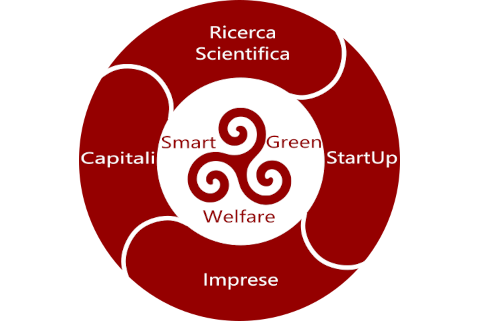
In a smart land, innovation should not be concentrated only in large urban centers but distributed across the entire territory. Local businesses, in fact, can collaborate with universities, research centers, and institutions to develop solutions that enhance the competitiveness and sustainability of productive districts. Agriculture also plays a crucial role in this context, especially regarding environmental sustainability and food security.
Bonomi emphasizes the importance of supporting quality agriculture and short supply chains, using technology to optimize production processes and reduce waste, thus promoting a more sustainable and integrated model of economic development.